Materials
Fronts, worktops and finishes
The options in plain words: where each one works well and how to look after it. We talk about material types, not brands; the final choice is made together, with samples, after the survey.
Kitchens, wardrobes, bathrooms
Cabinet fronts
The fronts are the visible face of a kitchen or wardrobe. There are three main options, and they can be combined in one project.
-
Lacquer

Texture: representative An MDF front that is painted and sealed to give a seamless, single-colour surface. It can be high-gloss or matt, the choice of colours is very wide, and there are no visible edge bands.
- Works well for
- Handleless modern kitchens; anyone after high gloss or a particular colour.
- Care
- Wipe with a soft, damp cloth; avoid scourers and harsh chemicals. Fine scratches and fingerprints show more readily on high gloss.
-
Melamine-faced board
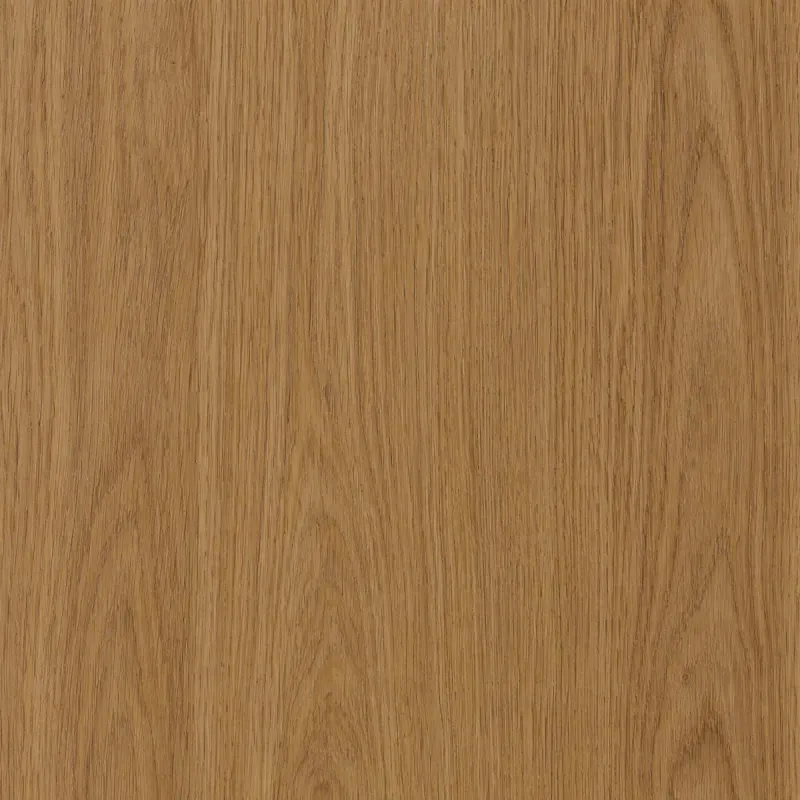
Texture: representative Ready-made chipboard or MDF with a melamine surface pressed on, its edges closed with banding. It comes in many woodgrain, plain and textured decors. It suits flat fronts; it cannot be profiled or routed.
- Works well for
- Large areas such as wardrobes, entryway and study units; woodgrain cabinets; kitchens on a tighter budget.
- Care
- Wipe with a damp cloth. Keep edge bands away from standing water, especially around the sink and dishwasher.
-
MDF (foil-wrapped or painted)
Texture: representative Routed fronts are cut from MDF: shaker, classic framed or grooved designs. The surface is either wrapped in PVC foil (membrane) or painted. Foil gives a seamless wrapped finish, while painted MDF can take any colour, just like lacquer.
- Works well for
- Shaker and classic kitchens; framed vanity units and wardrobes.
- Care
- Wipe with a damp cloth. For foil-wrapped fronts next to the oven or dishwasher, we recommend a protective strip against heat and steam.
Kitchens and bathrooms
Worktops
The worktop is the hardest-working surface in the kitchen. Choose it for how it handles heat, water and scratches as much as for its looks.
-
Laminate (including woodgrain)
Texture: representative A decorative, hard-wearing laminate surface pressed onto chipboard. It comes in wood, stone and plain designs; woodgrain laminate gives a warm look with less upkeep than solid timber.
- Works well for
- Kitchens that want a warm wood look; budget-conscious projects.
- Care
- Use a trivet rather than setting hot pans down directly. Do not let water stand at joints or around the sink.
-
Compact laminate
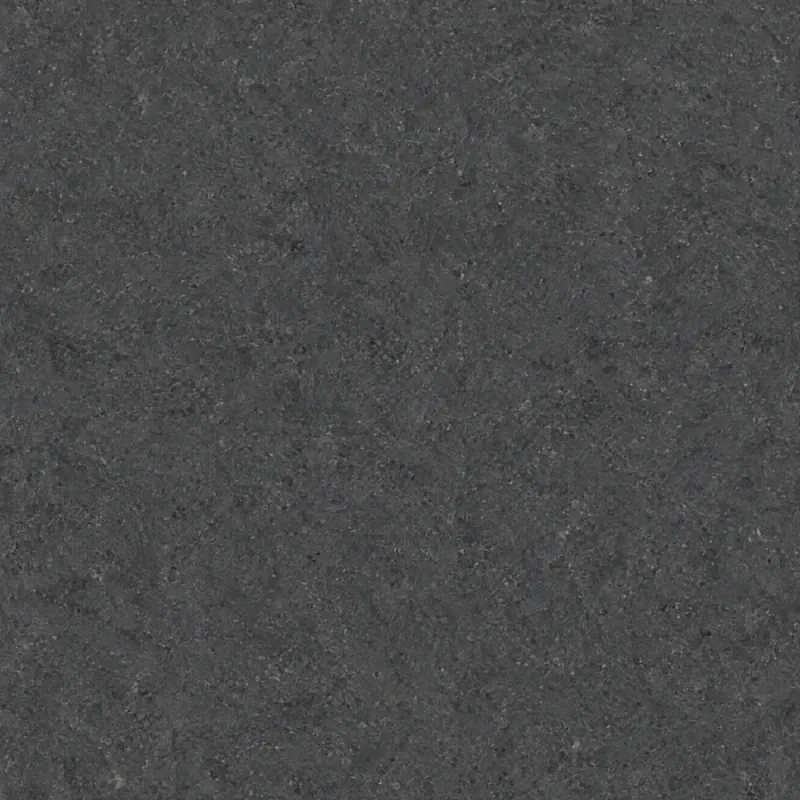
Texture: representative A thin, dense slab made of resin-impregnated layers pressed under high pressure, solid all the way through. It stands up to water and knocks, and its slim edge looks modern.
- Works well for
- Handleless kitchens with a slim worktop; bathroom counters.
- Care
- Wipe with a damp cloth; use a chopping board rather than cutting on the surface.
-
Quartz composite
Texture: representative A surface made from crushed quartz bound with resin. It is non-porous, resists stains and has a consistent colour across the slab; white and light shades are popular.
- Works well for
- Busy kitchens; white or light-coloured worktops and islands.
- Care
- Soapy water or a neutral cleaner is enough. Use a trivet for very hot pans and avoid harsh chemicals such as bleach.
-
Stone look: natural stone and porcelain slab
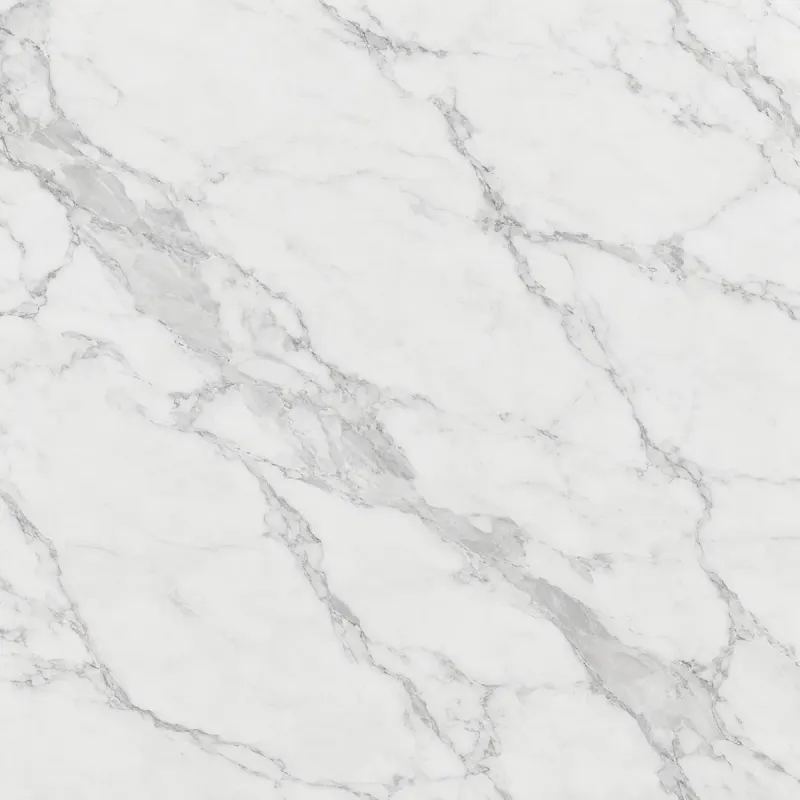
Texture: representative Natural stones such as marble and granite, or porcelain slabs that look like stone; either gives a veined, genuine stone feel. Natural stone can be porous and needs resealing from time to time; porcelain stands up better to heat and stains.
- Works well for
- Islands, marble-look kitchens and bathroom counters.
- Care
- Do not leave acids such as lemon juice or vinegar on natural stone. A neutral cleaner is enough for porcelain.
Details
Wood, glass and light
Surface and lighting details you will see again and again in our finished work.
-
Wood veneer and oak look
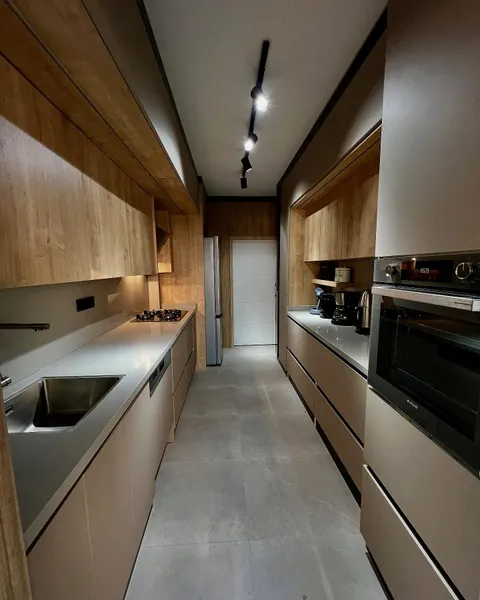
Real wood veneer or oak-effect surfaces bring warmth to wall cabinets, tall-unit niches, TV walls and studies. They balance easily with greige, anthracite and white.
- Works well for
- Galley kitchens, open shelving, study and TV walls.
- Care
- Wipe with a damp cloth along the grain. In direct sun the colour can mellow over time.
-
Fluted panels
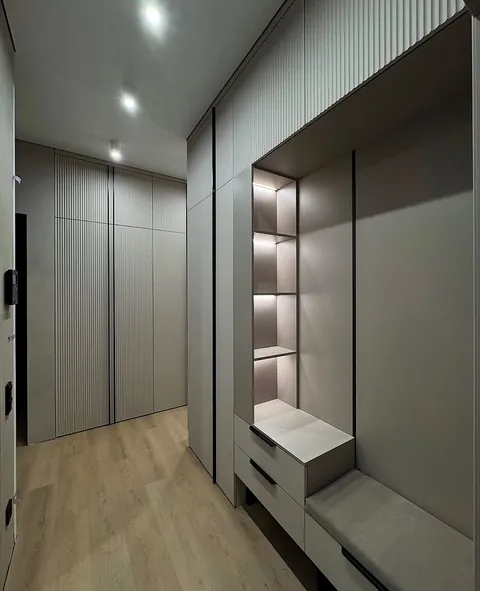
Fronts and panels with vertical grooves add rhythm and depth to wardrobes, entryway units, island ends and walls. Used as doors, they make storage read as part of the wall.
- Works well for
- Entryway units, wardrobes, kitchen island ends.
- Care
- Dust the grooves with a soft brush or a microfibre cloth.
-
Glass and smoked-glass display units
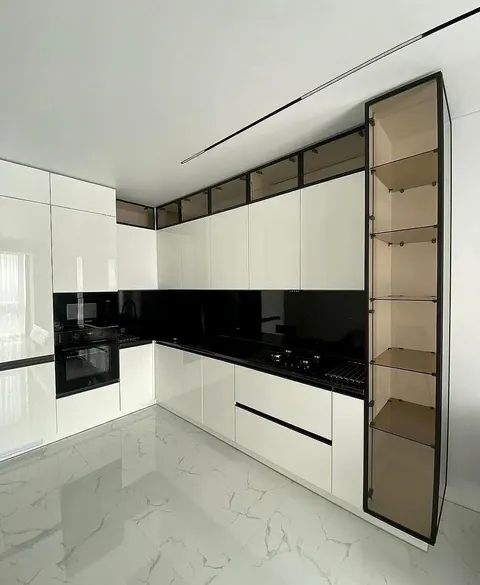
Clear or smoked glass doors in slim black frames. With glass shelves and interior lighting they show off glassware, crockery and decorative pieces, and lighten a run of closed cabinets.
- Works well for
- Full-height display columns, rows of wall cabinets, study shelving.
- Care
- Clean the glass with glass cleaner and the frame with a damp cloth.
-
LED shelving and hidden lighting
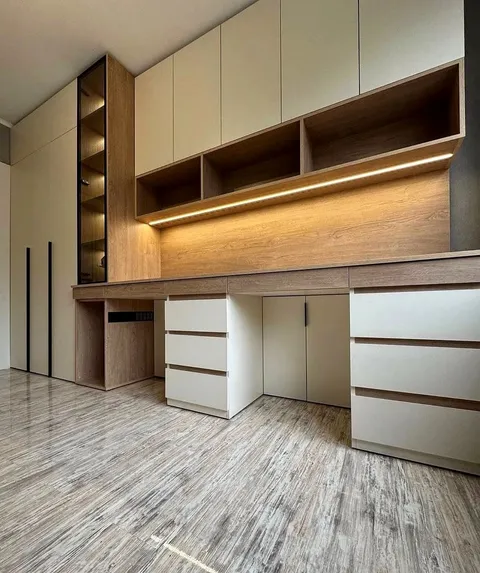
Warm LED strips hidden under shelves and wall cabinets or inside niches light the worktop and give the room a soft glow in the evening.
- Works well for
- Above the worktop, open shelves, display units, entryway niches.
- Care
- Wipe LED profiles with a dry cloth; we recommend keeping drivers and connections accessible.
Behind the doors
Fittings and interior organisation
A good kitchen starts behind the doors. These are solutions used in our finished projects.
-
Handleless (gola) rail
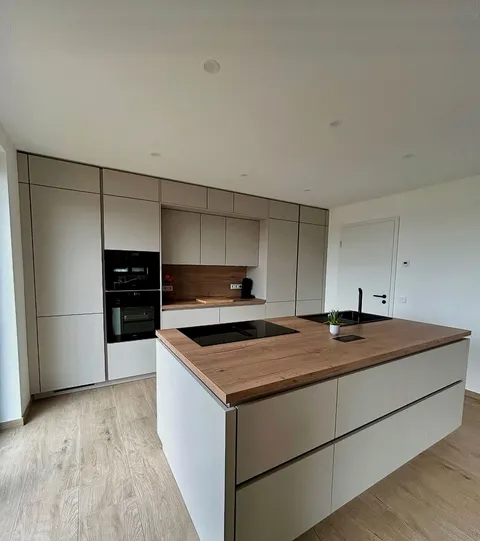
A grip channel built into the cabinet or front instead of handles. Surfaces stay clean-lined, and nothing sticks out in a narrow walkway.
- Works well for
- Modern and galley kitchens, islands.
- Care
- Wipe the channel with a damp cloth now and then so grease and dust do not build up.
-
Cutlery inserts and inner drawers
Cutlery trays and inner drawers fitted to the drawer size keep cutlery, utensils and small items in order.
- Works well for
- Top drawers next to the hob and worktop.
- Care
- Most inserts lift out for washing; wipe the drawer with a dry cloth.
-
Pull-out larders and corner baskets
Pull-out larders in tall units, narrow pull-out baskets and swing-out corner baskets bring items at the back within easy reach.
- Works well for
- Tall units, narrow modules beside the hob, the corners of L- and U-shaped kitchens.
- Care
- Wipe the baskets now and then, and keep heavy items in the lower ones.
-
Plate racks and dish drainers
A drainer rack in the wall cabinet over the sink, or a pull-out plate organiser below it: washed plates and glasses dry behind a door and the worktop stays clear.
- Works well for
- Wall cabinets over the sink, drawers next to it.
- Care
- Empty and rinse the drip tray regularly.
The exact price follows a free survey
Price depends on size, materials and fittings. The survey and 3D visualisation are free; once your choices are settled, we prepare a detailed quote.